Product Attributes – A Key to Understanding Your Customers
Business
Business
01/01/2026

Product Attributes – A Key to Understanding Your Customers
Business
Business
01/01/2026
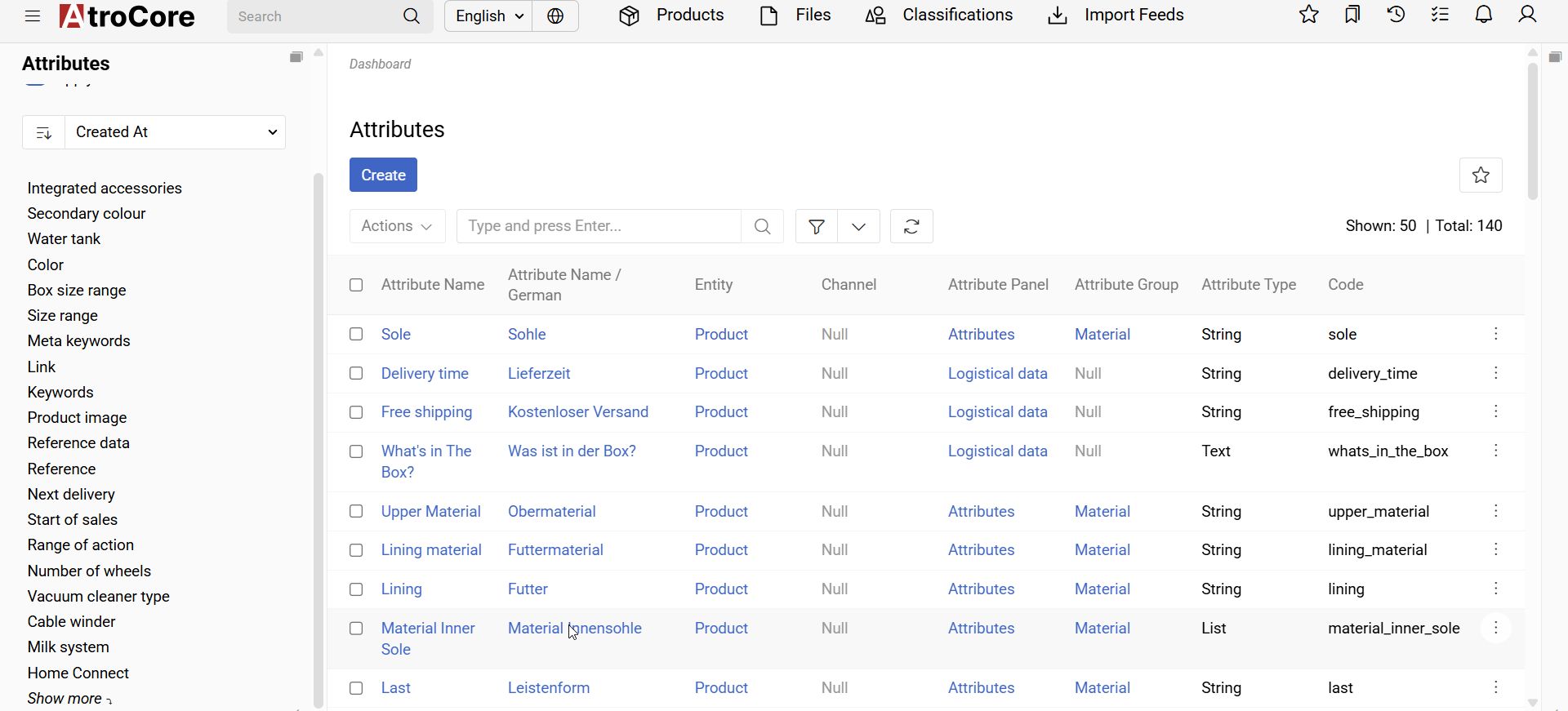
Product attributes are the individual details that make up product master data and describe what a product is, how it differs from others, and how it should be presented and sold online.
Product attributes define a product's uniqueness, provide differentiation from similar products, and in many cases can make or break an online sale. If customers cannot determine from your attribute information whether the product meets their needs, they are likely to look elsewhere.
To improve customer satisfaction, businesses should ensure their product information is complete and accurate across all platforms where their customers shop, especially in a multichannel retail environment.
For B2B companies, attributes play an even greater role in e-commerce success because B2B products often have many variations, specifications, and complex details. This is why customers need clear information about all important aspects of your product, including its physical and chemical properties, specific dimensions, and compatibility with other products.
What are Product Attributes?
Product attributes are the characteristics that define and explain your products to online shoppers. Each product you store has a unique set of features and characteristics that can be described as "product attributes". Also known as product metadata or tags, product attributes help you and your customers distinguish one product from another. Examples include size, color, material, weight, capacity, technical specifications, compatibility, and even certifications or safety ratings. Attributes help your product be seen in an increasingly crowded online space. They give the product a character that, in turn, improves the shopping path. Product attributes are the building blocks for all technology solutions, both customer/user-oriented and internal/operational efficiency. Having a reliable product attribute base and accurate metadata allows brands to easily implement additional solutions to increase revenue.How Products Receive Attributes
Product attributes play a critical role in how effectively online stores present, filter, and sell products. Attributes such as size, color, material, or technical specifications allow customers to quickly find products that match their needs. Filters in e-commerce rely directly on these attributes, making accurate and complete attribute data essential.What Are Attributes and Filters?
Filters are built from product attributes that are closely related to one another. When attributes are consistently defined and applied across products, customers can easily narrow down search results. The more attributes a product has, the higher the chance it will be discovered through filtering or keyword searches—ultimately improving visibility and sales.Common Approaches to Assigning Attributes
There are several established approaches for assigning attributes to products:- Attribute Sets Platforms like Magento 2 use attribute sets. When a product is created, it is assigned an attribute set that determines which attributes are required or available.
- Product Templates Some Product Information Management (PIM) systems, such as Plytix, offer product templates. A template defines a predefined group of attributes, and when a product is created using that template, those attributes are automatically associated with the product.
- Product Families Other systems, like Akeneo, refer to these groupings as product families. All products within a family share the same set of attributes relevant to that product type.
Classification-Based Attribute Assignment
The most common and flexible approach is product classification. In a classification-based system, each product belongs to one or more classifications that define which attributes are required. For example, a T-shirt typically needs attributes such as size, color, fabric, and fit. When a product is assigned to the “T-shirt” classification, the system automatically requires the user to fill in all attributes associated with that classification. This approach ensures more complete and standardized product data, better filtering and navigation for end customers, and improved search visibility with higher conversion potential.Multiple Classifications per Product
Advanced PIM systems designed for mid-sized and large businesses—such as AtroPIM—allow products to belong to multiple classifications at the same time. In this case, the product inherits attributes from all assigned classifications. For example, a product can belong to both the “Clothes” classification and the “T-shirt” classification. As a result, the product must include attributes from both categories, leading to richer product descriptions and more powerful filtering options.Why Classification Matters
Classification is a key method for unifying the description of similar products. It ensures consistency across catalogs, simplifies data management, and improves the overall customer experience. For both manufacturers and retailers, well-structured classifications lead to better data quality, easier scaling, and increased sales performance.Types of Attributes
Product attributes describe specific product functions and provide additional information. They are used as parameters for component search, navigation criteria, and product comparison. There are tangible and intangible attributes:- Tangible attributes: Physical characteristics such as size, design, length, packaging, weight, volume, taste, quantity, and material composition.
- Intangible attributes: Non-physical characteristics such as publication date, price, quality, reliability, and aesthetics. For example, when choosing a car, intangible attributes such as fuel-efficiency ratings, warranty length, safety certifications, or emission class can strongly influence a buyer’s decision. Even if the physical features are appealing, specific safety ratings or performance scores may shift a customer’s preference toward a competing brand.
Key Product Attributes
As an e-commerce store owner, it is your responsibility to monitor important product attributes and optimize them to enhance the shopping experience. Accurate product descriptions and well-defined attributes help customers find products easily and support long-term sales growth. Below is a list of essential product attributes every eCommerce catalog should include. 1. Product Name The product name should be clear, concise, and informative enough for customers to understand what the item is at a glance. It should communicate the essence of the product without being overly long or complex. 2. Product Pictures Product images help customers visualize an item when they cannot touch or inspect it in person. To showcase products effectively, consider the following best practices:- Resolution: At least 1500 × 1500 px; 2000 × 2000 px or higher recommended for zoom.
- File size: Ideally under 1–2 MB after compression for fast loading (some platforms allow up to 20 MB).
- Formats: JPG/JPEG for photos, PNG for transparency, or WEBP if supported.
- Aspect ratio: Square (1:1) for consistent display across sites and marketplaces.
- Image quality: Clear, well-lit images with neutral backgrounds (often white for marketplaces).
- GTIN (Global Trade Item Number): International product identification standard.
- ISBN (International Standard Book Number): Used specifically for books.
- UPC (Universal Product Code): Common in retail for identifying product variations.
- MSI Plessey: Used in retail and warehouse inventory systems.
- 2D Barcodes: Store more data than traditional 1D barcodes.
- QR Codes: Used for tracking and marketing; fast to scan but not compatible with laser scanners.
Why Product Attributes Matter
Product attributes are more than simple descriptions. They help customers make confident purchasing decisions, improve site usability, and increase search visibility. Attributes allow shoppers to compare similar products from different brands or manufacturers. When product data is complete and consistent, customers can easily evaluate options and choose the product that best fits their needs. Well-structured attributes also power internal site search and filtering. Search bars and filters based on attributes such as size, color, material, or composition help customers quickly narrow down results and find relevant products without frustration. From an SEO perspective, accurate attributes included in product titles and descriptions improve relevance and visibility in search engines. This makes it easier for potential customers to discover the right product at the right time.Creating Product Attributes That Drive Sales
Effective product attributes start with understanding your customers. Insights from customer support teams, product reviews, social media, and marketplace feedback reveal which attributes matter most. Applying SEO best practices and using social listening tools can further help identify relevant search terms and expectations. Studying competitors, especially top-performing products, provides valuable context on which attributes customers expect and prioritize. This helps ensure your product information remains competitive and complete. Structured research methods such as conjoint analysis can be used to measure how different attributes influence purchasing decisions. By gathering feedback directly from your target audience, you can identify which features truly drive value. Customer reviews are another critical source of insight. They highlight recurring themes, preferences, and pain points, helping you refine product descriptions and emphasize the most important attributes. For products with multiple specifications, comparison tools with clear filters and simple language improve the shopping experience and support faster decision-making. Finally, consistent attribute management is essential. Organizing attributes by category, defining relationships, and maintaining standardized values ensures data quality. Product Information Management (PIM) software can help centralize, manage, and optimize product attributes at scale.Key Takeaways
Product attributes are the foundation of product master data, and classification gives them structure and consistency. Proper classification ensures that similar products share the same required attributes, leading to more complete data and a better customer experience. Advanced PIM systems allow products to simultaneously belong to multiple classifications, combining attribute sets for richer descriptions. Strong classification not only improves data quality but also boosts discoverability, conversion, and scalability across e-commerce channels.Stay updated - sign up
Do like thousands of others - receive our best advice by email.
Enter your email address
Register now
You are now registered - thank you
I have read and understand the terms of use and privacy policy.
When you sign up for our newsletter, you also accept our terms of use and personal data policy. You can easily and at any time unsubscribe again if you change your mind.

The complete guide to cyber security for beginners
Learn the basics of cyber security and protect your digital devices with this e-book. From virus protection to strong passwords, youll get tips and tools to protect yourself from online threats and keep your data safe.
Get the guide